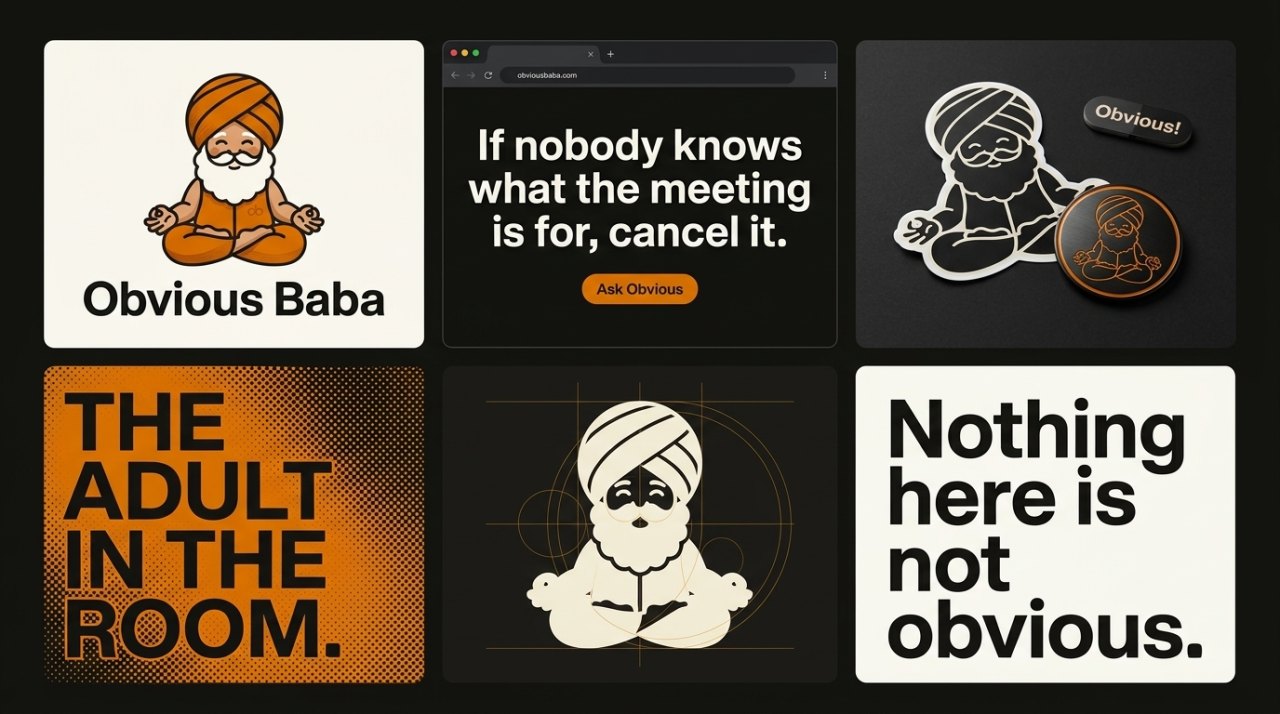
If you ask AI to write a three-page email and your coworker asks AI to summarize it into one line, just send the one line.
StoryChurchill's War on Woolly PaddingHistory
~49 sec listen
On August 9, 1940, with Luftwaffe bombers hammering Britain, Prime Minister Winston Churchill had finally had enough of bloated Whitehall paperwork. From 10 Downing Street, he fired off a secret War Cabinet memo titled simply 'Brevity,' noting that reading mountains of long reports wasted both time and energy.
Churchill ordered departments to banish 'woolly padding' like 'Consideration should be given to the possibility of carrying into effect' and stick to crisp paragraphs - or headings alone. 'The discipline of setting out the real points concisely,' he wrote, 'will prove an aid to clearer thinking.' Even in 1940, nobody needed three pages of fluff to deliver one sentence of news.
Source: Winston S. Churchill, War Cabinet Memorandum 'Brevity' (WP(G)(40)211, Aug 9, 1940), UK National Archives.
A thirty-minute meeting with eight people costs four hours, not thirty minutes.
StoryThe Calendar Purge That Put a Price Tag on InvitesEconomics
~46 sec listen
In January 2023, e-commerce giant Shopify ran a company-wide 'Calendar Purge,' automatically deleting every recurring meeting of three or more people and banning replacements for two weeks - clearing an estimated 322,000 hours off the year's schedule. To keep calendar bloat from creeping back, COO Kaz Nejatian launched an internal Google Calendar extension in July 2023.
The tool calculated the live dollar cost of every meeting based on duration, headcount, and average role compensation. A routine 30-minute chat with three staffers instantly flashed $700 to $1,600; invite an executive and it crossed $2,000. Nobody expenses a $1,600 lunch casually, yet offices book four-hour labor bills with one click.
Source: Shopify internal announcement & Fortune / CNN Business coverage (Jan & July 2023).
If nobody knows what the meeting is for, the meeting is for canceling.
StoryThe Congress That Only DancedHistory
~51 sec listen
When Europe's kings, ministers, and diplomats gathered in Vienna in autumn 1814 to redraw the continent after Napoleon's exile, they forgot one minor detail: a working plenary agenda. Month after month slid by in glittering masquerade balls, hunting parties, banquets, and endless side-committees that settled almost nothing.
Watching the spectacle, aging Austrian field marshal Prince Charles-Joseph de Ligne delivered history's sharpest status update: 'Le Congrès ne marche pas, il danse' - 'The Congress does not move forward; it dances.' Only when Napoleon escaped Elba in March 1815 did the diplomats suddenly remember why they were in the room. Without a clear purpose, even a summit of emperors turns into a caterer's dream.
Source: Adam Zamoyski, 'Rites of Peace: The Fall of Napoleon and the Congress of Vienna' (2007); Prince de Ligne (1814).
Closing your laptop also closes ninety-four browser tabs.
StoryThe Waiters Who Forgot Paid ChecksScience
~49 sec listen
In a bustling 1920s Berlin café, psychologist Kurt Lewin noticed something uncanny about the waiters: they could recite sprawling, complex dinner orders for half a dozen tables without writing a word down, yet the instant a table paid its bill, the waiter could not remember what they had ordered.
His student Bluma Zeigarnik tested the phenomenon in 1927, discovering that unfinished tasks linger noisily in human memory while completed ones vanish cleanly - the Zeigarnik Effect. Every half-read article and open browser tab is an unpaid dinner check nagging your brain. Sometimes the smartest productivity hack isn't finishing all ninety-four tabs; it's settling the bill and shutting the lid.
Source: Bluma Zeigarnik, 'Über das Behalten von erledigten und unerledigten Handlungen,' Psychologische Forschung (1927).
No emergency has ever been solved faster by typing in all caps.
StoryThe West Virginia Drawl That Calmed AviationHistory
~48 sec listen
When test pilot Chuck Yeager broke the sound barrier in the Bell X-1 on October 14, 1947 - flying with two cracked ribs from a horseback fall - his radio calls sounded like a man ordering iced tea on a porch. As Tom Wolfe famously documented in The Right Stuff, Yeager's flat, unhurried West Virginia drawl quietly became the gold standard for airline pilots worldwide.
Aviation psychologists later confirmed why that calm cadence works: high-pitched shouting spikes cortisol and narrows attention across a cockpit, whereas low-arousal speech keeps crews troubleshooting under pressure. Whether at Mach 1 or in a Slack channel, screaming in capital letters never fixes the hydraulics.
Source: Tom Wolfe, 'The Right Stuff' (1979); Chuck Yeager & Leo Janos, 'Yeager: An Autobiography' (1985).
An unread forty-page strategy memo and a blank page produce the exact same alignment.
StoryThe Secret Behind Van Halen's Brown M&MsArt & Culture
~50 sec listen
During Van Halen's massive 1982 arena tour, the band's 53-page technical contract rider contained a seemingly diva-ish demand buried deep inside the catering section: a bowl of M&Ms backstage, with absolutely no brown ones, under penalty of forfeiting the entire show at full pay.
For years, critics mocked it as rock-star excess - until frontman David Lee Roth revealed the engineering genius behind it. Their show hauled nine eighteen-wheelers of heavy lighting rigs and high-voltage gear into older arenas. If Roth walked backstage and spotted a single brown M&M, he knew instantly that the venue hadn't read the 53-page safety specs. Unread documents don't align rooms; they just hide landmines.
Source: David Lee Roth, 'Crazy from the Heat' (1997); NPR & Snopes verification of the 1982 Van Halen rider.
During the winter of 1636-1637 in the Dutch Republic, tavern traders turned rare striped tulip bulbs like Semper Augustus into speculative futures contracts, bidding single bulbs past the price of a handsome Amsterdam canal house. Optimists insisted the soaring market wasn't a bubble - it was a golden commercial opportunity.
Then, at a routine auction in Haarlem in early February 1637, buyers simply stopped raising their hands. Within days, prices collapsed across Holland, leaving speculators holding paper promises for bulbs nobody wanted and debts they could not settle. You can rename a crater an 'upside opportunity,' but the auctioneer still wants his guilders.
Source: Anne Goldgar, 'Tulipmania: Money, Honor, and Knowledge in the Dutch Golden Age' (University of Chicago Press, 2007).
If you are angry at everyone in the room, eat a sandwich before making any permanent decisions.
StoryVoodoo Dolls and Low Blood SugarScience
~49 sec listen
In a 2014 PNAS study, Ohio State psychologist Brad Bushman and colleagues handed 107 married couples an unusual homework kit: a blood-glucose meter, a voodoo doll representing their spouse, and 51 pins. Every evening for 21 days, participants measured their blood sugar and stuck pins into the doll reflecting how irritated they felt with their partner.
The data was hilariously blunt: people with lower evening blood glucose stabbed significantly more pins into their spouse's doll - and later blasted louder, longer noise bursts at them in a lab task. Before you fire the team or burn a bridge, check whether you are having a moral awakening or just a carbohydrate emergency.
Source: Brad J. Bushman et al., 'Low glucose relates to greater aggression in married couples,' PNAS (2014).
Water fixes half of what you blame on burnout. Sleep fixes the other half.
StoryThe Ten-Hour Bedtime That Fixed Free ThrowsSports
~50 sec listen
In 2011, Stanford sleep researcher Cheri Mah ran a disarmingly simple experiment with eleven players on the Stanford men's varsity basketball team. She did not change their shooting mechanics, add conditioning drills, or hire a sports psychologist; she simply asked them to spend at least ten hours in bed every night for five to seven weeks.
Averaging nearly two extra hours of actual sleep per night, the players' free-throw accuracy jumped 9%, three-point shooting rose 9.2%, and their 282-foot sprint times dropped from 16.2 to 15.5 seconds. Pair that with lab studies showing mild dehydration tanks mood and focus, and half of 'existential burnout' turns out to be a glass of water and a pillow.
Source: Cheri D. Mah et al., 'The Effects of Sleep Extension on the Athletic Performance of Collegiate Basketball Players,' SLEEP (2011).
You cannot finish a task by moving it to a prettier to-do app.
StoryVictor Hugo's Locked ClosetArt & Culture
~49 sec listen
In autumn 1830, French novelist Victor Hugo was hopelessly behind on The Hunchback of Notre-Dame, facing a fierce financial penalty from his publisher if he missed his February 1831 deadline. Instead of buying finer quills or reorganizing his desk, Hugo ordered his valet to lock every stitch of his outdoor clothing inside a chest.
Left with only a large gray knitted shawl, Hugo could not step onto the streets of Paris to dine, stroll, or procrastinate. He sat down with a bottle of ink and finished the entire novel in mid-January, weeks ahead of schedule. Fancy productivity tools polish the cage; actual work happens when you lock up your coat.
Source: Adèle Hugo, 'Victor Hugo: A Life Related by One Who Has Witnessed It' (1863); Graham Robb, 'Victor Hugo' (1997).
Adding five people to a late project gives you five new people to ask why it is late.
StoryThe Million-Dollar Lesson of IBM OS/360Engineering
~48 sec listen
In the mid-1960s, computer scientist Fred Brooks led more than 1,000 programmers building OS/360, the flagship operating system for IBM's System/360 mainframe. When the schedule began slipping badly, management reached for the oldest reflex in business: pour more engineers onto the project.
Instead of catching up, OS/360 slid further behind. Every newcomer had to be trained by veteran engineers who stopped coding to explain the architecture, while communication channels exploded quadratically. In his 1975 classic The Mythical Man-Month, Brooks distilled the wreckage into Brooks's Law: 'Adding manpower to a late software project makes it later.' Nine people still cannot produce a baby in one month.
Source: Frederick P. Brooks Jr., 'The Mythical Man-Month: Essays on Software Engineering' (1975).
A deadline nobody believes is just a wish with a calendar invite.
StoryAustralia Day 1963 at Bennelong PointEngineering
~49 sec listen
When New South Wales Premier Joseph Cahill rushed construction of the Sydney Opera House in March 1959, he stamped an ambitious deadline on the calendar: Australia Day, January 26, 1963, on a budget of AU$7 million. There was just one minor snag - nobody yet knew how to engineer Danish architect Jørn Utzon's soaring concrete roof shells.
Workers had to tear up and rebuild the podium foundations mid-project while mathematicians spent years discovering the shells could be cut from a single sphere. The Opera House finally opened in October 1973 - ten years late and AU$102 million later. Putting a date on a ceremony does not convince concrete to obey.
Source: Sydney Opera House Trust historical archive & Peter Murray, 'The Saga of Sydney Opera House' (2004).
If your backup has never been tested, you do not have a backup; you have a hobby.
StoryThe Volvo Seatbelt That Saved Toy Story 2Engineering
~51 sec listen
In 1998, an accidental Unix deletion command (`/bin/rm -r -f `) tore through Pixar's master server, erasing roughly 90% of Toy Story 2* in seconds as Woody's hat and entire city blocks vanished live on animators' screens. The studio calmly reached for its automated backup tapes - only to discover the system had been silently failing for a month.
The film escaped total oblivion only because supervising technical director Galyn Susman had been working from home on maternity leave and keeping a synced copy on her home workstation. Staff wrapped her computer in blankets and buckled it into a Volvo's back seat. Until you actually restore from it, a backup is just wishful thinking on tape.
Source: Oren Jacob & Galyn Susman interviews (The Next Web / Independent / Pixar archival retrospectives, 2012).
People read the shortest sentence on the slide and ignore the rest.
StoryThe Reassuring Headline That Hid a Six-Hundred-Fold GapEngineering
~54 sec listen
While Space Shuttle Columbia orbited Earth in January 2003, Boeing engineers prepared a PowerPoint deck for NASA managers evaluating a chunk of insulating foam that had struck the shuttle's wing during launch. As data-design critic Edward Tufte later exposed, the pivotal slide led with a soothing headline: "Review of Test Data Indicates Conservatism for Tile Penetration."
Buried near the bottom in a cramped, fourth-level bullet point sat the actual physical truth: the foam block that hit Columbia measured 1,920 cubic inches, whereas the safety test model used a three-cubic-inch piece - a strike 640 times larger than tested data. Managers absorbed the cheerful headline and missed the fatal footnote. If your sharpest warning needs a magnifying glass, it is already invisible.
Source: Edward Tufte's analysis of the 2003 Space Shuttle Columbia Boeing PowerPoint slide (1,920 vs. 3 cubic inches = 640×); CAIB report, CSU, & IEEE.
If a button needs a paragraph to explain what clicking it does, rename the button.
StoryThe Doors That Needed Sticky NotesEngineering
~50 sec listen
In 1988, cognitive scientist Don Norman walked into a glass office entrance, grabbed a gleaming vertical bar handle, pulled - and slammed straight into the glass because the door opened outward. Frustrated by daily collisions with sleek hardware, he coined the concept of 'affordances' in The Design of Everyday Things.
A flat metal plate screams 'push'; a vertical handle screams 'pull.' Whenever an architect puts a pull-handle on a push-door, building managers end up taping ugly paper 'PUSH' signs onto million-dollar lobbies - a phenomenon designers still call a Norman Door. If your interface requires a paragraph of apology next to the button, the label isn't the problem; the button is.
Source: Don Norman, 'The Design of Everyday Things' (1988; originally 'The Psychology of Everyday Things').
Replying to emails at midnight only trains people to email you at midnight.
StoryThe Servers Volkswagen Put to BedEconomics
~47 sec listen
In December 2011, Volkswagen's German works council realized that company-issued BlackBerrys had quietly turned every employee's living room into an unpaid night shift. Because conscientious staff answered late-evening messages, colleagues and managers learned that midnight was fair game.
Instead of sending another polite memo urging 'work-life balance,' Volkswagen reconfigured its email servers for over 1,000 unionized workers to stop routing emails thirty minutes after their shifts ended and resume only thirty minutes before the next morning's shift. Phone calls still worked for genuine emergencies, yet the midnight inbox vanished overnight. Boundaries do not work when announced in prose; they work when the server stops answering.
Source: BBC News & Business Insider coverage of Volkswagen Germany works council agreement (Dec 2011).
Automating a broken process just delivers broken results at machine speed.
StoryTen Million Dollars a Minute at Knight CapitalEconomics
~49 sec listen
On the morning of August 1, 2012, Wall Street market-maker Knight Capital Group rolled out updated trading software across eight production servers for the New York Stock Exchange's opening bell. One technician accidentally missed the eighth server, leaving a dormant 2005 test function called 'Power Peg' sitting inside it.
When the market opened at 9:30 AM, a reused software flag woke the zombie code up. Designed to buy high and sell low without checking order limits, the eighth server blasted millions of erroneous trades across 154 stocks in just 45 minutes - losing $440 million, or nearly $10 million a minute, and nearly destroying the firm. Speed never fixes a bug; it just multiplies the invoice.
Source: U.S. Securities and Exchange Commission (SEC) Release No. 70694 (Oct 16, 2013) on Knight Capital Americas LLC.
Before buying software to summarize your meetings, try having fewer meetings.
StoryThe Email Boom That Sold More PaperScience
~48 sec listen
For decades, tech futurists promised that email and word processors would usher in the 'paperless office,' consigning filing cabinets to museums. Yet when cognitive researchers Abigail Sellen and Richard Harper studied modern workplaces for their 2001 MIT Press book The Myth of the Paperless Office, they found the exact opposite.
Introducing email into an organization led to an average 40% increase in paper consumption. Because digital tools made firing off long attachments effortless, overwhelmed employees printed them out just to read, annotate, and survive the flood. Buying clever software to digest your bloat rarely shrinks the bloat - it usually just creates a sleeker printer queue.
Source: Abigail J. Sellen & Richard H. R. Harper, 'The Myth of the Paperless Office' (MIT Press, 2001).
StoryThe French Rope That Got Lighter With Every HandScience
~45 sec listen
In 1913, French agricultural engineer Maximilien Ringelmann published a deceptively simple tug-of-war experiment using a strain gauge to measure how hard engineering students pulled a rope alone versus in teams. Common sense predicted that eight men should deliver eight times the force of one.
Instead, individual effort shrank with every pair of hands added: two pullers gave 93% each, three gave 85%, four dropped to 77%, and in an eight-person group, every individual pulled at just 49% of their solo strength. Ringelmann blamed both coordination friction and quiet slacking - social loafing. Put eight names in the 'Owner' column, and half the rope goes slack.
Source: Maximilien Ringelmann, 'Recherches sur les moteurs animés,' Annales de l'Institut National Agronomique (1913).
Loud confidence is wrong at the exact same rate as quiet guessing.
StoryTwenty Years of Pundits Losing to ChimpsScience
~45 sec listen
Between 1984 and 2003, psychologist Philip Tetlock quietly graded 284 prominent political and economic experts - professors, intelligence analysts, and television pundits - across roughly 28,000 specific forecasts for his 2005 book Expert Political Judgment. When he tallied the final scoreboard, the experts performed barely better than a dart-throwing chimpanzee.
Worse still, Tetlock uncovered an inverse relationship between fame and accuracy: the loudest, most media-friendly 'hedgehogs' who spoke with sweeping certainty scored consistently worse than low-profile 'foxes' who admitted doubt and hedged their bets. Volume is an acoustic property, not an epistemic one - a megaphone never improves the accuracy of a coin flip.
Source: Philip E. Tetlock, 'Expert Political Judgment: How Good Is It? How Can We Know?' (Princeton University Press, 2005).
In The Effective Executive (1967), management thinker Peter Drucker recounted a legendary boardroom habit of longtime General Motors chairman Alfred P. Sloan. After a committee finished presenting a major strategic proposal and every executive around the mahogany table nodded in instant, smooth agreement, Sloan did not call a vote.
'Gentlemen,' Sloan said, 'I take it we are all in complete agreement on the decision here.' Everyone nodded again. 'Then,' Sloan replied, 'I propose we postpone further discussion of this matter until our next meeting to give ourselves time to develop disagreement and perhaps gain some understanding of what the decision is all about.' An echo chamber only needs one chair.
Source: Peter F. Drucker, 'The Effective Executive' (1967), recounting Alfred P. Sloan at General Motors.
Urgent for them is not automatically an emergency for you.
StoryThe Speech That Built the Eisenhower MatrixHistory
~51 sec listen
On August 19, 1954, speaking at Northwestern University in Evanston, Illinois before the Second Assembly of the World Council of Churches, President Dwight D. Eisenhower paused to share a line he credited to a former college president - a sentiment he noted Northwestern's own Dr. J. Roscoe Miller would recognize well.
'I have two kinds of problems, the urgent and the important,' Eisenhower told the crowd. 'The urgent are not important, and the important are never urgent.' Having commanded the D-Day invasion and the White House, he knew that other people's frantic deadlines love wearing sirens. Just because someone else's inbox is on fire doesn't mean you have to grab a bucket.
Source: Dwight D. Eisenhower, Address at the Second Assembly of the World Council of Churches, Evanston, IL (Aug 19, 1954).
When you stop talking, your odds of hearing the answer go up dramatically.
StoryThe Silent Wings of the Barn OwlNature
~50 sec listen
A barn owl (Tyto alba) can hunt a vole scurrying beneath a blanket of snow in total pitch darkness without seeing a whisker. Its secret is a masterclass in shutting up to listen: its heart-shaped facial disc acts like a parabolic satellite dish, funneling faint rustles into asymmetrically placed ear openings - one slightly higher than the other - to triangulate sound within two degrees.
Just as crucial, comb-like serrations along its wing edges break up air turbulence, rendering its flight nearly silent so its own flapping never drowns out its prey. Even evolution agrees: you cannot hear the clue while your own wings are making all the noise.
Source: Masakazu Konishi, 'How the Owl Tracks Its Prey,' American Scientist (1973); Cornell Lab of Ornithology.
You do not need a task force to check if the roof is leaking; look at the floor.
StoryRichard Feynman's Glass of Ice WaterScience
~47 sec listen
On February 11, 1986, during a televised Rogers Commission hearing investigating the Space Shuttle Challenger disaster, NASA officials and contractors spent hours circling through dense binders of engineering jargon over whether freezing Florida launch temperatures had stiffened the booster rockets' rubber O-rings.
Quietly sitting at the panel table, Nobel physicist Richard Feynman squeezed a small sample of the actual O-ring rubber inside a C-clamp, dunked it into his glass of ice water, and pulled it out a moment later. On live television, the frozen rubber refused to spring back. Five seconds of ice water settled what a thousand pages of committee prose tried to obscure.
Source: Report of the Presidential Commission on the Space Shuttle Challenger Accident (June 1986); televised hearing Feb 11, 1986.
Ask Obvious
World's messiest problems, answered in two plain sentences.
AI replacement panic, seven-meeting Tuesdays, ghost jobs, and forty-tab dashboards look remarkably simple once someone says the obvious part out loud.
"Our product has 47 tabs because every big prospect asked for just one tiny extra toggle."
Obvious Answer
A pocketknife with forty blades cuts mostly the person holding it. Build one sharp blade that slices cleanly and say no with a warm smile.
T-Shirt Rule: Simplicity is earned by polite subtraction.
TheWORKCompany Cool Index & Brand System
Agents now do the work; people still answer for it. Across Club, joq, ewent.ai, skill.re, manav.id, eval.qa, Moat, and Dium, Obvious Baba keeps software honest, cuddly, and free of corporate theater.
"Most common day for a heart attack is Monday, for a reason." (Career Development). Grounded aphorisms for builders, also served via JSON API and federated custom element.