A day without laughter is just a meeting that could have been an email.
StoryThe Nuclear Reactor and the Bike ShedEconomics
~47 sec listen
In his 1957 satire Parkinson's Law, British naval historian C. Northcote Parkinson illustrated corporate absurdity with a fictional finance committee reviewing three items. First, a £10 million atomic reactor: nobody truly understood the physics, so the committee approved it in two and a half minutes to avoid looking foolish.
Next came a £350 staff bicycle shed. Because everyone knew what a roof looked like, the room argued passionately for forty-five minutes over asbestos versus galvanized iron, followed by an even longer battle over coffee refreshments. Parkinson called it the Law of Triviality. If a meeting has neither laughter nor stakes, you are just debating bike-shed paint.
Source: C. Northcote Parkinson, 'Parkinson's Law and Other Studies in Administration' (1957).
A polite room nodding in unison is rarely agreement; it is usually people waiting for lunch.
StoryThe 106-Mile Drive Nobody WantedScience
~49 sec listen
In 1974, management scholar Jerry Harvey published a famous real-life parable from a 104°F Sunday afternoon in Coleman, Texas. Sitting comfortably on a shaded porch playing dominoes, Harvey's father-in-law casually suggested driving 53 miles to Abilene for cafeteria dinner. Though Harvey dreaded riding in an un-air-conditioned 1958 Buick through a dust storm, he nodded politely.
His wife agreed, his mother-in-law agreed, and four hours later they returned sweaty, exhausted, and disgusted by the cafeteria food - only to confess one by one that none of them had ever wanted to go. Every person had nodded to please the room. Beware unanimous nodding; it is usually a road trip to Abilene.
Source: Jerry B. Harvey, 'The Abilene Paradox: The Management of Agreement,' Organizational Dynamics (1974).
Management is checking boxes; leadership is making sure the boxes actually matter.
StoryHolding the Invisible HorsesHistory
~50 sec listen
In his 1966 classic Men, Machines, and Modern Times, MIT historian Elting E. Morison recounted an efficiency expert filming a five-man British coastal artillery crew firing Boer War-era field guns hitched to motorized trucks during World War II. Watching the footage, the analyst spotted a bizarre pause.
Right before every shot, one soldier stepped back and stood rigidly at attention doing nothing. Puzzled, the crew could not explain why - until a retired artillery colonel watched the film and laughed: 'Oh, he's holding the horses.' Trucks had replaced horses decades earlier, yet the checklist survived untouched. Checking every box perfectly is impressive right up until you realize the horses are gone.
Source: Elting E. Morison, 'Men, Machines, and Modern Times' (MIT Press, 1966).
Typing "quick question" in chat has never once made the question quick.
StoryThe 358-Year Margin NoteScience
~50 sec listen
Around 1637, French lawyer and amateur mathematician Pierre de Fermat scribbled a breezy note in the margin of his copy of Diophantus's Arithmetica. Claiming that $x^n + y^n = z^n$ has no positive integer solutions for any $n$ greater than 2, he teased: 'I have discovered a truly marvelous demonstration of this proposition that this margin is too narrow to contain.'
That casual throwaway teaser haunted mathematics for 358 years, surviving Euler, Gauss, and supercomputers until British mathematician Andrew Wiles spent seven secretive years in his attic producing a 100-plus-page proof in 1994-1995. Beware anyone who opens with 'quick question' - they are usually handing you a three-century margin note.
Source: Simon Singh, 'Fermat's Enigma' (1997); Andrew Wiles, Annals of Mathematics (1995).
The fastest way to proofread an email is to click Send.
StoryThe Three-Letter Typo That Cost £300History
~48 sec listen
In 1631, London's royal printers Robert Barker and Martin Lucas painstakingly typeset a new edition of the King James Bible, rolling roughly 1,000 copies off the press and shipping them into English pews. Nobody caught a thing during proofing - until readers opened Exodus 20:14.
Missing a single three-letter word, the Seventh Commandment boldly instructed England: 'Thou shalt commit adultery.' Furious, King Charles I and Archbishop William Laud dragged the printers before the Star Chamber, revoked their royal license, burned nearly the entire print run, and slammed them with a ruinous £300 fine. Some typos stay completely invisible under a magnifying glass until the exact second they hit publish.
Source: British Library & Museum of the Bible historical records on the 1631 'Wicked Bible' (Barker & Lucas).
A password taped to your monitor is just a polite welcome sign.
StoryThe Live TV Sticky-Note LeakHistory
~46 sec listen
On April 8, 2015, a sophisticated cyberattack knocked French global broadcaster TV5Monde off the air across twelve channels and hijacked its social media feeds. As news crews rushed into the Paris headquarters to film live interviews about the harrowing breach, a reporter sat calmly in front of a newsroom partition.
Eagle-eyed television viewers watching in high definition immediately spotted sheets of paper and yellow sticky notes plastered behind him - listing the network's actual social media passwords, including a YouTube credential literally written as lemotdepassedeyoutube ('the password for YouTube'). Firewalls cost millions; a yellow Post-it note in camera frame is complimentary hospitality.
Source: The Guardian & PCWorld coverage of the TV5Monde cyberattack newsroom broadcast (April 2015).
Brainstorming without writing anything down is just group daydreaming.
StoryThe Yale Experiment That Broke BrainstormingScience
~50 sec listen
In 1953, ad executive Alex Osborn popularized "brainstorming," promising that freewheeling group chatter would double creative output. Five years later, Yale psychologist Donald Taylor and his colleagues put 96 students to the test: half brainstormed aloud in lively four-person teams, while the other half sat silently alone and wrote their ideas down. When researchers pooled the solo writers' sheets into "nominal groups" of four, the quiet writers generated roughly twice as many unique - and higher-quality - ideas as the talking rooms.
Talking out loud lets one speaker block three thinkers while unrecorded sparks vanish into air. If nobody picked up a pen, your brainstorm was just a podcast with no microphone.
Source: Donald W. Taylor, Paul C. Berry & Clifford H. Block (1958), Yale University study in Administrative Science Quarterly.
Saying "let us circle back" has never produced a circle or a solution.
StoryOne Hundred Forty-Three Years at the Green TableHistory
~47 sec listen
In 1663, envoys of the Holy Roman Empire convened in Regensburg, Germany, for an Imperial Diet - and then never adjourned. For 143 continuous years, the "Perpetual Diet" sat in session while delegates argued over diplomatic rank, seating precedence, and procedural memos around green-cloth tables. That endless chamber gave the German language the idiom am grünen Tisch entscheiden - making detached bureaucratic decisions from a green table - until Napoleon finally ended the meeting in 1806 by dissolving the entire Empire.
Next time someone cheerfully suggests "circling back next quarter," remember Regensburg. A meeting that refuses to decide is not a strategy; it is furniture.
Source: The Perpetual Diet of Regensburg (Immerwährender Reichstag, 1663-1806) and the origin of the German idiom am grünen Tisch.
Every "five-minute fix" in software should be multiplied by lunch.
StoryThe Four-Year Opera House That Took FourteenEngineering
~47 sec listen
When construction began on the Sydney Opera House in 1959, planners projected a tidy four-year build costing AU$7 million. Fourteen years and AU$102 million later - after architect Jørn Utzon resigned mid-project and engineers spent years figuring out how to hold up its iconic concrete sails - the doors finally opened in 1973. Psychologists Daniel Kahneman and Amos Tversky later used such overruns to define the "planning fallacy" (1979): humans chronically forecast best-case fairy tales even when past scars scream otherwise.
Software engineers rediscover this law every afternoon at 11:55 a.m. Whenever someone promises a "quick five-minute patch," pack a sandwich and cancel your two o'clock.
Source: Sydney Opera House construction (1959-1973; AU$7M estimate vs. AU$102M actual) and Kahneman & Tversky's (1979) Planning Fallacy.
The person who talks the longest in the meeting rarely has to build what was decided.
StoryThe King Who Added One Too Many Gun DecksHistory
~50 sec listen
In 1626, Sweden's King Gustavus Adolphus ordered a flagship warship, the Vasa, meant to terrify Europe. Mid-construction, the King kept sending directives from afar demanding heavier bronze cannons and a full second enclosed gun deck - ignoring shipwrights who quietly knew the hull was far too narrow and top-heavy to carry the weight.
Nobody dared tell the monarch no. On August 10, 1628, Vasa unfurled its sails in Stockholm harbor before cheering crowds, traveled barely 1,300 meters, heeled over in a mild gust of wind, and sank - drowning roughly thirty people. The King, safely away on campaign in Poland, never got wet. Beware the loud visionary who never has to sail the boat.
Source: Sinking of Swedish warship Vasa, Aug 10, 1628 (Vasa Museum, Stockholm; Encyclopaedia Britannica).
You can delegate a task, but you cannot delegate the consequences.
StoryThe Two-Hundred-Year Bank Sold for One PoundEconomics
~49 sec listen
Founded in 1762, Barings Bank had financed the Louisiana Purchase and served the British monarchy for generations. By the early 1990s, senior London executives happily delegated their lucrative Singapore futures desk to an ambitious 28-year-old named Nick Leeson - allowing him to manage both trading and back-office settlement, the exact role meant to audit him.
When Leeson's bets soured, he hid the red ink inside a secret error account numbered 88888, doubling down until losses reached £827 million - twice the bank's available capital. In February 1995, the 233-year-old institution collapsed and was sold to ING for a symbolic £1. You can hand off the keyboard, but your signature stays on the wreckage.
Source: Collapse of Barings Bank, Feb 1995 (Bank of England Board of Banking Supervision Report, July 1995).
In 2007, the Oakland Raiders selected quarterback JaMarcus Russell first overall in the NFL Draft and locked him into a six-year deal worth up to $68 million, with roughly $30 million guaranteed. Early signs were ominous: sluggish conditioning, missed cues, and erratic play. Former teammates later recounted coaches handing Russell a blank game-film DVD to test his study habits - only for him to return claiming the plays 'looked good.'
Still, admitting a catastrophic No. 1 pick hurts an organization's pride. Oakland kept trotting him out across three losing seasons before finally cutting him in 2010, swallowing tens of millions in dead cap and wasted years. The costliest mistake isn't hiring wrong - it's paying three more seasons to protect your ego.
Source: JaMarcus Russell 2007 Raiders contract & 2010 release (NFL.com; teammate accounts via Warren Sapp).
Nobody ever looked back on their life and wished they had attended more status updates.
StoryEighteen Months Without a Single Faculty CommitteeScience
~48 sec listen
In the summer of 1665, the Great Plague swept London and forced Cambridge University to shut its doors. A quiet 23-year-old scholar named Isaac Newton packed his notebooks and retreated to his family's farmhouse at Woolsthorpe Manor in Lincolnshire.
Suddenly stripped of lectures, administrative check-ins, and campus politics, Newton spent roughly eighteen uninterrupted months staring out at his orchard, grinding prisms in his bedroom, and filling pages with math. In that single stretch - later dubbed his Annus Mirabilis, or Year of Wonders - he laid the foundations of calculus, modern optics, and universal gravitation. Amazing what a mind produces once you cancel its recurring status updates.
Source: Isaac Newton's Annus Mirabilis at Woolsthorpe Manor, 1665-1666 (Cambridge University Library; Richard Westfall, Never at Rest).
StoryOne Heroic Shift That Raised Everyone's QuotaHistory
~54 sec listen
On the night of August 31, 1935, Soviet coal miner Alexei Stakhanov descended into the Central Irmino pit in Ukraine with a pneumatic drill and a dedicated support crew clearing rubble and propping timbers behind him. In less than six hours, he hacked out 102 tons of coal - fourteen times his official shift quota.
Stalin's propaganda machine instantly turned him into a national poster boy for the 'Stakhanovite movement.' His fellow miners were far less thrilled: factory and mine bosses across the USSR promptly used his staged super-shift as proof that ordinary quotas were too soft, ratcheting up daily targets for everyone else. Be careful how loudly you outperform a broken system; it rarely rewards you with a hammock.
Source: Alexei Stakhanov, Aug 31, 1935, Central Irmino mine (Lewis Siegelbaum, Stakhanovism and the Politics of Productivity, 1988).
If you never say no, your calendar belongs to whoever asks loudest.
StoryThe Nest Hijacker That Sounds Like Eight Hungry BabiesNature
~51 sec listen
In European wetlands, a female common cuckoo (Cuculus canorus) watches patiently until a reed warbler leaves its nest, then slips in a single matching egg and vanishes. Days later, the cuckoo chick hatches early, blindly heaves the warbler's real eggs over the rim, and claims the nest alone.
Even more diabolical, researchers discovered the lone cuckoo chick emits a rapid-fire begging call that acoustically mimics an entire brood of hungry warbler chicks. Fooled by the sheer volume of demand, the tiny foster parents exhaust themselves from dawn to dusk cramming insects into a giant impostor three times their weight. Never set boundaries, and the loudest beak in the room owns your daylight.
Source: Common cuckoo (Cuculus canorus) brood parasitism and vocal mimicry (Nick Davies, University of Cambridge, Nature / Cuckoo).
Most burnout is not from doing too much work; it is from doing work that does not matter.
StoryThe Sisyphus LEGO ExperimentScience
~52 sec listen
In 2008, behavioral economists Dan Ariely, Emir Kamenica, and Dražen Prelec paid volunteers to assemble 40-piece LEGO Bionicle figures under identical declining wages. Half the participants saw each finished figure admired and lined up neatly on a desk. The other half - the 'Sisyphus' group - watched the researcher immediately dismantle each completed figure right before their eyes and hand back the pieces to build again.
Same plastic bricks, same physical effort, same cash. Yet the meaningful group built an average of 10.6 figures, while the Sisyphus group quit after just 7.2. People can endure grueling effort when something stays built; what hollows out the human spirit is watching your labor get disassembled before the glue dries.
Source: Ariely, Kamenica & Prelec (2008), 'Man's search for meaning: The case of Legos,' Journal of Economic Behavior & Organization.
Everyone wants honest feedback until it arrives without gift wrapping.
StoryThe 'Sack of Coal' That Outlived Its CriticsArt & Culture
~57 sec listen
In 1891, France's prestigious Société des Gens de Lettres commissioned Auguste Rodin to sculpt a truthful, commanding monument to novelist Honoré de Balzac. Rodin spent seven obsessive years studying Balzac's life, skipping polite flattery to capture the writer's ferocious late-night intensity - draping a heavy, towering figure in his famous monkish dressing gown.
When Rodin unveiled the raw plaster statue in 1898, the society recoiled in horror. Expecting a neatly buttoned bronze gentleman, critics sneered at it as a 'snowman' and a 'sack of coal,' and the commissioners formally rejected it. Rodin refunded their money and took his masterpiece home - where it waited forty years to be hailed as a landmark of modern sculpture. People beg for raw honesty until it shows up unvarnished.
Source: Auguste Rodin's Monument to Balzac (1898), Musée Rodin archives & Société des Gens de Lettres records.
Nobody ever regrets the angry email they left in drafts.
StoryThe Gettysburg Letter That Stayed in the DrawerHistory
~52 sec listen
In July 1863, days after the Union victory at Gettysburg, President Abraham Lincoln was incandescent with frustration. General George Meade had allowed Robert E. Lee's battered Confederate army to slip safely back across the swollen Potomac River, squandering a chance to end the Civil War.
Lincoln sat down and poured every ounce of his anguish into a searing, unsparing letter to Meade - telling him the magnitude of the misfortune was immeasurable. Then he stopped, folded the page, wrote 'Never sent, and never signed' across the envelope, and locked it in his desk. Meade stayed in command and fought through to Appomattox. Draft folders have quietly saved more careers and alliances than any apology ever written.
Source: Abraham Lincoln's unsent letter to Maj. Gen. George G. Meade, July 14, 1863 (Library of Congress, Lincoln Papers).
A fresh pair of eyes sees in five seconds what a tired pair missed for five hours.
StoryWhen 'Pigeon Droppings' Turned Out to Be the Big BangScience
~53 sec listen
In 1964, Bell Labs radio astronomers Arno Penzias and Robert Wilson were driven nearly mad by a stubborn, faint microwave hiss coming uniformly from every direction in their giant Holmdel horn antenna in New Jersey. Convinced it was equipment noise, they checked every wire, taped over rivets, and even climbed inside to scrub out pigeons and what they delicately called 'white dielectric material.'
Still, the hiss refused to budge. Then Penzias phoned Princeton physicist Robert Dicke, whose team happened to be hunting for the theoretical afterglow of the universe's birth. Within minutes, Dicke hung up and told his colleagues, 'Boys, we've been scooped.' Fresh eyes didn't see bird poop - they saw the 1978 Nobel Prize.
Source: Arno Penzias & Robert Wilson discovery of Cosmic Microwave Background, 1964 (Nobel Prize in Physics 1978 archives).
The loudest criticism usually comes from the cheapest seats.
StoryThe Critic Whose Insult Named an Art MovementArt & Culture
~53 sec listen
In April 1874, a group of painters rejected by the official Paris Salon pooled their francs to mount an independent show in a photographer's studio. Journalist Louis Leroy strolled through for the satirical paper Le Charivari, stopped in front of Claude Monet's hazy harbor painting Impression, Sunrise, and sharpened his pen.
Wallpaper in its embryonic state is more finished than that seascape, Leroy sneered, mocking the whole exhibition as mere 'Impressionists.' He collected his fee and went home feeling clever. Today, almost nobody can name another sentence Louis Leroy ever wrote, while Monet's 'unfinished' canvas christened one of the most beloved movements in art history. Cheap seats always shout loudest; history rarely writes down their names.
Source: Louis Leroy, 'L'Exposition des Impressionnistes,' Le Charivari, April 25, 1874; Musée Marmottan Monet.
Every expert is just someone who made all the beginner mistakes earlier and wrote them down.
StoryTwo Hundred Wooden Wings in a Bicycle ShopExploration
~49 sec listen
After their 1900 and 1901 gliders at Kitty Hawk produced barely a third of the lift promised by Europe's most respected aviation tables, Orville and Wilbur Wright faced a choice: blame the wind or check the math. Back in their Dayton, Ohio bicycle shop, they built a six-foot wooden wind tunnel powered by a simple shop fan.
Over the autumn of 1901, they bent scrap metal into more than two hundred miniature airfoil shapes, testing each one on homemade hacksaw-blade balances and logging every flop in crisp columns of handwritten data. By December 1903, they flew. Mastery isn't mystical talent; it's just burning through the beginner mistakes early and keeping honest notebooks.
Source: Wright brothers' 1901 Dayton wind tunnel experiments (Smithsonian National Air and Space Museum).
If you ask AI to write a three-page email and your coworker asks AI to summarize it into one line, just send the one line.
StoryChurchill's War on Woolly PaddingHistory
~49 sec listen
On August 9, 1940, with Luftwaffe bombers hammering Britain, Prime Minister Winston Churchill had finally had enough of bloated Whitehall paperwork. From 10 Downing Street, he fired off a secret War Cabinet memo titled simply 'Brevity,' noting that reading mountains of long reports wasted both time and energy.
Churchill ordered departments to banish 'woolly padding' like 'Consideration should be given to the possibility of carrying into effect' and stick to crisp paragraphs - or headings alone. 'The discipline of setting out the real points concisely,' he wrote, 'will prove an aid to clearer thinking.' Even in 1940, nobody needed three pages of fluff to deliver one sentence of news.
Source: Winston S. Churchill, War Cabinet Memorandum 'Brevity' (WP(G)(40)211, Aug 9, 1940), UK National Archives.
A thirty-minute meeting with eight people costs four hours, not thirty minutes.
StoryThe Calendar Purge That Put a Price Tag on InvitesEconomics
~46 sec listen
In January 2023, e-commerce giant Shopify ran a company-wide 'Calendar Purge,' automatically deleting every recurring meeting of three or more people and banning replacements for two weeks - clearing an estimated 322,000 hours off the year's schedule. To keep calendar bloat from creeping back, COO Kaz Nejatian launched an internal Google Calendar extension in July 2023.
The tool calculated the live dollar cost of every meeting based on duration, headcount, and average role compensation. A routine 30-minute chat with three staffers instantly flashed $700 to $1,600; invite an executive and it crossed $2,000. Nobody expenses a $1,600 lunch casually, yet offices book four-hour labor bills with one click.
Source: Shopify internal announcement & Fortune / CNN Business coverage (Jan & July 2023).
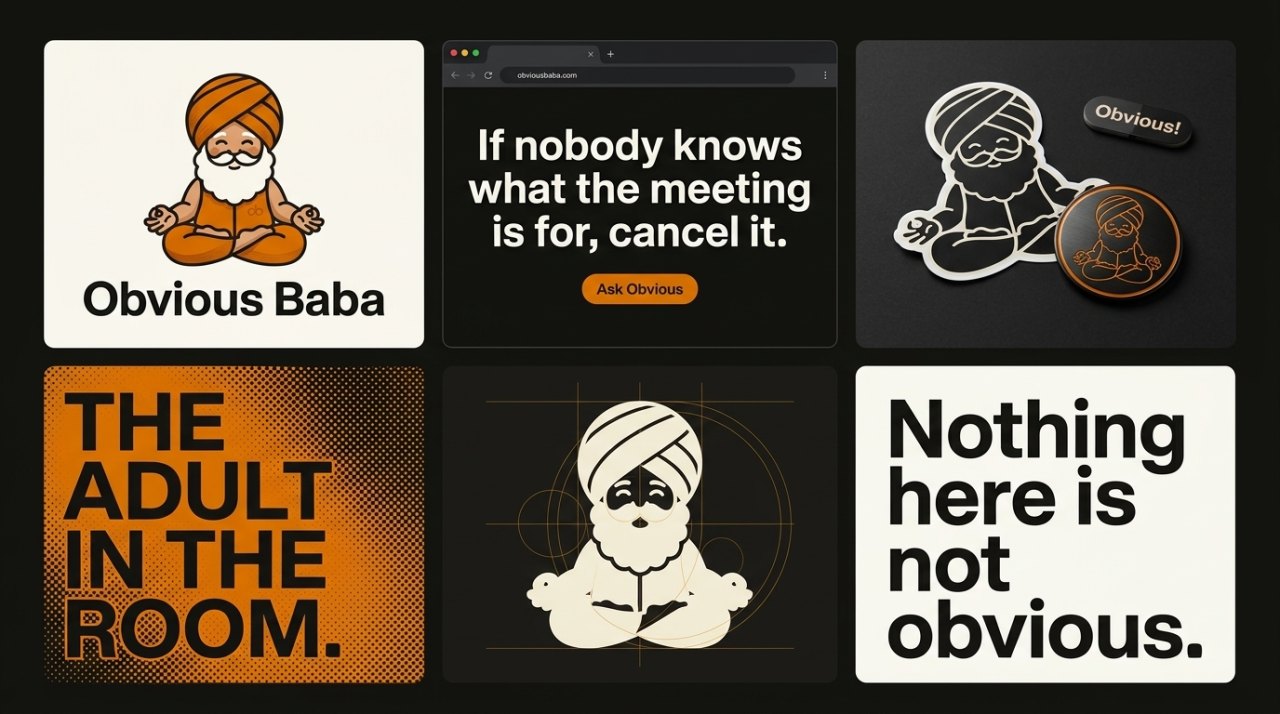
If nobody knows what the meeting is for, the meeting is for canceling.
StoryThe Congress That Only DancedHistory
~51 sec listen
When Europe's kings, ministers, and diplomats gathered in Vienna in autumn 1814 to redraw the continent after Napoleon's exile, they forgot one minor detail: a working plenary agenda. Month after month slid by in glittering masquerade balls, hunting parties, banquets, and endless side-committees that settled almost nothing.
Watching the spectacle, aging Austrian field marshal Prince Charles-Joseph de Ligne delivered history's sharpest status update: 'Le Congrès ne marche pas, il danse' - 'The Congress does not move forward; it dances.' Only when Napoleon escaped Elba in March 1815 did the diplomats suddenly remember why they were in the room. Without a clear purpose, even a summit of emperors turns into a caterer's dream.
Source: Adam Zamoyski, 'Rites of Peace: The Fall of Napoleon and the Congress of Vienna' (2007); Prince de Ligne (1814).
Ask Obvious
World's messiest problems, answered in two plain sentences.
AI replacement panic, seven-meeting Tuesdays, ghost jobs, and forty-tab dashboards look remarkably simple once someone says the obvious part out loud.
"Our product has 47 tabs because every big prospect asked for just one tiny extra toggle."
Obvious Answer
A pocketknife with forty blades cuts mostly the person holding it. Build one sharp blade that slices cleanly and say no with a warm smile.
T-Shirt Rule: Simplicity is earned by polite subtraction.
TheWORKCompany Cool Index & Brand System
Agents now do the work; people still answer for it. Across Club, joq, ewent.ai, skill.re, manav.id, eval.qa, Moat, and Dium, Obvious Baba keeps software honest, cuddly, and free of corporate theater.
"Most common day for a heart attack is Monday, for a reason." (Career Development). Grounded aphorisms for builders, also served via JSON API and federated custom element.