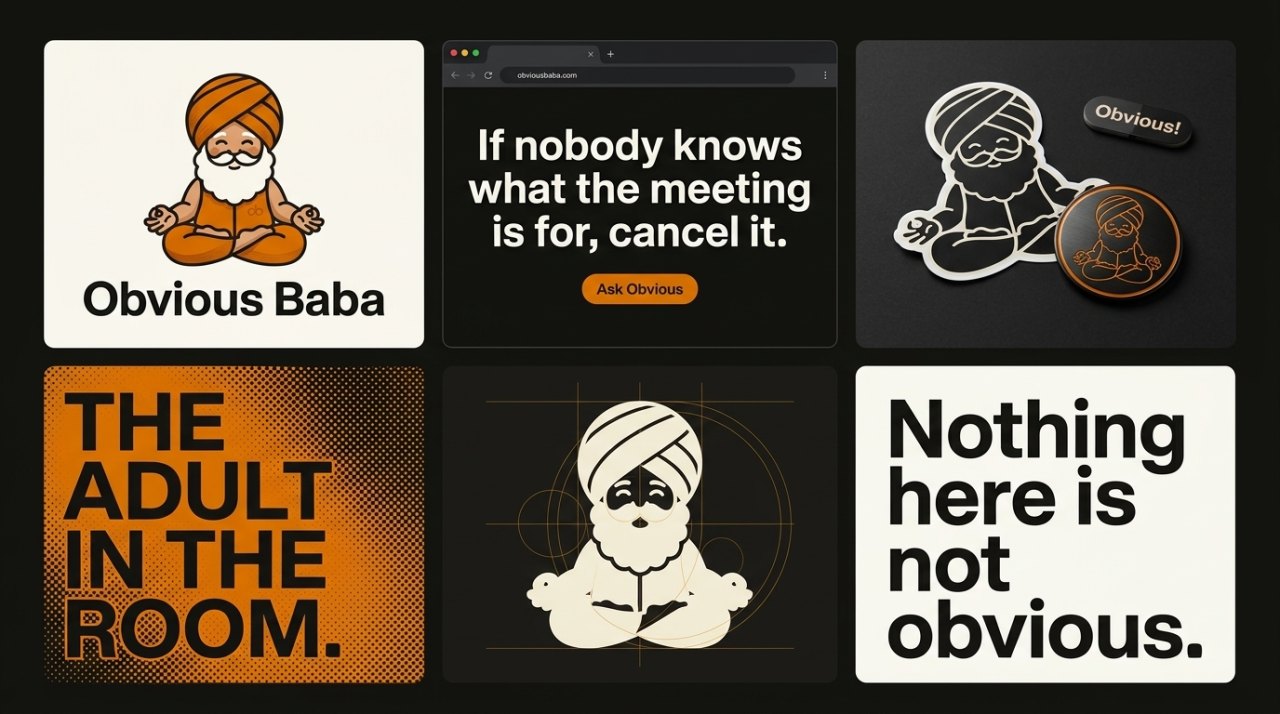
If you ask AI to write a three-page email and your coworker asks AI to summarize it into one line, just send the one line.
StoryChurchill's War on Woolly PaddingHistory
~49 sec listen
On August 9, 1940, with Luftwaffe bombers hammering Britain, Prime Minister Winston Churchill had finally had enough of bloated Whitehall paperwork. From 10 Downing Street, he fired off a secret War Cabinet memo titled simply 'Brevity,' noting that reading mountains of long reports wasted both time and energy.
Churchill ordered departments to banish 'woolly padding' like 'Consideration should be given to the possibility of carrying into effect' and stick to crisp paragraphs - or headings alone. 'The discipline of setting out the real points concisely,' he wrote, 'will prove an aid to clearer thinking.' Even in 1940, nobody needed three pages of fluff to deliver one sentence of news.
Source: Winston S. Churchill, War Cabinet Memorandum 'Brevity' (WP(G)(40)211, Aug 9, 1940), UK National Archives.
StoryThe Blood-Sharing Pact of Costa Rican Vampire BatsNature
~52 sec listen
In a dark Costa Rican hollow tree in 1984, biologist Gerald Wilkinson watched common vampire bats (Desmodus rotundus) break every rule of selfish survival. Because vampire bats burn energy fast and store almost no fat, missing blood meals for two or three nights means starvation. Up to a third of adult bats return from a hunt empty-bellied.
Instead of hoarding, well-fed bats regurgitate digested blood directly into the mouths of hungry roostmates - even non-relatives. Wilkinson discovered they keep strict social ledgers: bats share most reliably with longtime partners who have fed them before. Casual acquaintances might wish you luck in the dark, but your inner circle literally lets you eat out of their stomach.
Source: Gerald S. Wilkinson, 'Reciprocal food sharing in the vampire bat,' Nature (1984).
A thirty-minute meeting with eight people costs four hours, not thirty minutes.
StoryThe Calendar Purge That Put a Price Tag on InvitesEconomics
~46 sec listen
In January 2023, e-commerce giant Shopify ran a company-wide 'Calendar Purge,' automatically deleting every recurring meeting of three or more people and banning replacements for two weeks - clearing an estimated 322,000 hours off the year's schedule. To keep calendar bloat from creeping back, COO Kaz Nejatian launched an internal Google Calendar extension in July 2023.
The tool calculated the live dollar cost of every meeting based on duration, headcount, and average role compensation. A routine 30-minute chat with three staffers instantly flashed $700 to $1,600; invite an executive and it crossed $2,000. Nobody expenses a $1,600 lunch casually, yet offices book four-hour labor bills with one click.
Source: Shopify internal announcement & Fortune / CNN Business coverage (Jan & July 2023).
On Christmas Eve 1914, along freezing mud trenches near Ypres, Belgium, British soldiers heard an impossible sound drifting from the German lines: 'Stille Nacht,' accompanied by candles glowing atop the parapets. Hours earlier, those men had been firing rifles at each other in the deadliest war Europe had ever seen.
By Christmas morning, roughly 100,000 troops across stretches of the Western Front climbed out of their ditches to meet in No Man's Land. They shook hands, swapped bully beef for sauerkraut, traded uniform buttons, and kicked improvised balls across the frozen clay before generals ordered the truce crushed. If sworn enemies can share cigarettes in a crater, saying hello to the person next to you is hardly heroic.
Source: Imperial War Museums archives & Malcolm Brown, 'Christmas Truce: The Western Front December 1914.'
If nobody knows what the meeting is for, the meeting is for canceling.
StoryThe Congress That Only DancedHistory
~51 sec listen
When Europe's kings, ministers, and diplomats gathered in Vienna in autumn 1814 to redraw the continent after Napoleon's exile, they forgot one minor detail: a working plenary agenda. Month after month slid by in glittering masquerade balls, hunting parties, banquets, and endless side-committees that settled almost nothing.
Watching the spectacle, aging Austrian field marshal Prince Charles-Joseph de Ligne delivered history's sharpest status update: 'Le Congrès ne marche pas, il danse' - 'The Congress does not move forward; it dances.' Only when Napoleon escaped Elba in March 1815 did the diplomats suddenly remember why they were in the room. Without a clear purpose, even a summit of emperors turns into a caterer's dream.
Source: Adam Zamoyski, 'Rites of Peace: The Fall of Napoleon and the Congress of Vienna' (2007); Prince de Ligne (1814).
StoryThe Day Magellan's Crew Lost at SeaExploration
~52 sec listen
On July 9, 1522, the battered Spanish carrack Victoria - the sole surviving ship of Ferdinand Magellan's expedition, now captained by Juan Sebastián Elcano - dropped anchor at the Cape Verde Islands. Chronicler Antonio Pigafetta had faithfully logged every single sunrise for nearly three years without missing an entry. His journal swore it was Wednesday.
When sailors rowed ashore to buy food, Portuguese locals insisted it was Thursday, July 10. The crew panicked, convinced they had miscounted their holy days. Only later did astronomers realize their westward circumnavigation had chased the sun around the Earth, stretching each day by minutes until a full 24 hours vanished. Even when you keep a flawless calendar, today refuses to stay put.
Source: Antonio Pigafetta, 'The First Voyage Around the World' (1522); Royal Observatory Greenwich records on the International Date Line.
Closing your laptop also closes ninety-four browser tabs.
StoryThe Waiters Who Forgot Paid ChecksScience
~49 sec listen
In a bustling 1920s Berlin café, psychologist Kurt Lewin noticed something uncanny about the waiters: they could recite sprawling, complex dinner orders for half a dozen tables without writing a word down, yet the instant a table paid its bill, the waiter could not remember what they had ordered.
His student Bluma Zeigarnik tested the phenomenon in 1927, discovering that unfinished tasks linger noisily in human memory while completed ones vanish cleanly - the Zeigarnik Effect. Every half-read article and open browser tab is an unpaid dinner check nagging your brain. Sometimes the smartest productivity hack isn't finishing all ninety-four tabs; it's settling the bill and shutting the lid.
Source: Bluma Zeigarnik, 'Über das Behalten von erledigten und unerledigten Handlungen,' Psychologische Forschung (1927).
At the stroke of midnight on Thursday, December 29, 2011, the entire nation of Samoa jumped straight into Saturday, December 31. Friday, December 30 never happened. For 119 years, Samoa had sat east of the International Date Line, leaving businesses a full day behind their biggest trading partners in Sydney and Auckland - when Australia opened on Monday, Samoa was still in church on Sunday.
By hopping west across the Date Line, Samoa erased a whole Friday off the map (and still legally paid workers for the missing shift). Even so, citizens still woke up on Saturday looking back at Thursday. You can delete a date by act of parliament, and tomorrow will still line up politely behind yesterday.
Source: Government of Samoa International Date Line Act 2011; The Guardian & Smithsonian Magazine coverage (Dec 2011).
No emergency has ever been solved faster by typing in all caps.
StoryThe West Virginia Drawl That Calmed AviationHistory
~48 sec listen
When test pilot Chuck Yeager broke the sound barrier in the Bell X-1 on October 14, 1947 - flying with two cracked ribs from a horseback fall - his radio calls sounded like a man ordering iced tea on a porch. As Tom Wolfe famously documented in The Right Stuff, Yeager's flat, unhurried West Virginia drawl quietly became the gold standard for airline pilots worldwide.
Aviation psychologists later confirmed why that calm cadence works: high-pitched shouting spikes cortisol and narrows attention across a cockpit, whereas low-arousal speech keeps crews troubleshooting under pressure. Whether at Mach 1 or in a Slack channel, screaming in capital letters never fixes the hydraulics.
Source: Tom Wolfe, 'The Right Stuff' (1979); Chuck Yeager & Leo Janos, 'Yeager: An Autobiography' (1985).
In 1888, Scottish veterinarian John Boyd Dunlop grew tired of watching his ten-year-old son bounce painfully across Belfast cobblestones on a solid-rubber tricycle. Using a rubber garden hose, linen strips, and a football pump, Dunlop wrapped a cushion of trapped air around the rims and patented the pneumatic tire.
When cyclist Willie Hume rolled onto the Queen's College Sports track in Belfast on May 18, 1889, rivals riding solid rubber mocked his puffy 'sausage wheels.' Hume entered four races and won all four. Solid rubber had been rolling for decades, yet nobody realized the real engineering upgrade was empty space. Sometimes the most valuable part of a heavy machine is the nothing you pump inside it.
Source: Belfast Queen's College Sports records (May 18, 1889); Ulster Transport Museum & Dunlop historical archives.
An unread forty-page strategy memo and a blank page produce the exact same alignment.
StoryThe Secret Behind Van Halen's Brown M&MsArt & Culture
~50 sec listen
During Van Halen's massive 1982 arena tour, the band's 53-page technical contract rider contained a seemingly diva-ish demand buried deep inside the catering section: a bowl of M&Ms backstage, with absolutely no brown ones, under penalty of forfeiting the entire show at full pay.
For years, critics mocked it as rock-star excess - until frontman David Lee Roth revealed the engineering genius behind it. Their show hauled nine eighteen-wheelers of heavy lighting rigs and high-voltage gear into older arenas. If Roth walked backstage and spotted a single brown M&M, he knew instantly that the venue hadn't read the 53-page safety specs. Unread documents don't align rooms; they just hide landmines.
Source: David Lee Roth, 'Crazy from the Heat' (1997); NPR & Snopes verification of the 1982 Van Halen rider.
StoryThe Foot-Powered Highway of the AndesExploration
~50 sec listen
Long before asphalt or engines, the Inca Empire carved the Qhapaq Ñan - over 30,000 kilometers of stone-paved highways, suspension bridges, and mountain staircases stitching together peaks above 4,000 meters from Colombia to Chile. They built the entire network without a single horse or wheeled cart.
What turned cold Andean stone into a living nervous system was the chasqui: relay runners stationed every few kilometers in stone tambo waystations, blowing conch shells as they sprinted up to 240 kilometers a day in relays, carrying knotted quipu records and even fresh coastal fish to the emperor in Cusco. Strip away the runners and the world's greatest highway is just organized gravel waiting for feet.
Source: UNESCO World Heritage Centre, 'Qhapaq Ñan, Andean Road System' dossier.
During the winter of 1636-1637 in the Dutch Republic, tavern traders turned rare striped tulip bulbs like Semper Augustus into speculative futures contracts, bidding single bulbs past the price of a handsome Amsterdam canal house. Optimists insisted the soaring market wasn't a bubble - it was a golden commercial opportunity.
Then, at a routine auction in Haarlem in early February 1637, buyers simply stopped raising their hands. Within days, prices collapsed across Holland, leaving speculators holding paper promises for bulbs nobody wanted and debts they could not settle. You can rename a crater an 'upside opportunity,' but the auctioneer still wants his guilders.
Source: Anne Goldgar, 'Tulipmania: Money, Honor, and Knowledge in the Dutch Golden Age' (University of Chicago Press, 2007).
Silent and Listen are spelled with the exact same letters.
StoryThe Bird That Silenced Its Own Wings to HearNature
~51 sec listen
Most birds announce their arrival with a loud whoosh of air turbulence. A barn owl flies in near-total acoustic silence. Comb-like serrations along the leading edge of its primary feathers break turbulent air into quiet micro-currents, while velvety down absorbs the rustle of feather against feather. Evolution did not grant the owl stealth merely to sneak up on mice - it did so to keep the owl's own flight from drowning out its ears.
With asymmetrically placed ear openings and a satellite-dish facial disc, an owl can pinpoint a rodent rustling beneath pitch-black cover purely by sound. As long as you are generating noise, you are deaf to the signal right beneath you.
Source: Barn owl silent flight mechanics (serrated leading edges, velvety feathers, asymmetrical ears); National Audubon Society, MIT, and NIH.
If you are angry at everyone in the room, eat a sandwich before making any permanent decisions.
StoryVoodoo Dolls and Low Blood SugarScience
~49 sec listen
In a 2014 PNAS study, Ohio State psychologist Brad Bushman and colleagues handed 107 married couples an unusual homework kit: a blood-glucose meter, a voodoo doll representing their spouse, and 51 pins. Every evening for 21 days, participants measured their blood sugar and stuck pins into the doll reflecting how irritated they felt with their partner.
The data was hilariously blunt: people with lower evening blood glucose stabbed significantly more pins into their spouse's doll - and later blasted louder, longer noise bursts at them in a lab task. Before you fire the team or burn a bridge, check whether you are having a moral awakening or just a carbohydrate emergency.
Source: Brad J. Bushman et al., 'Low glucose relates to greater aggression in married couples,' PNAS (2014).
In June 1985, payload specialist Prince Sultan bin Salman Al Saud peered through the windows of Space Shuttle Discovery during mission STS-51-G alongside American and French crewmates. Looking down from low Earth orbit, he noticed a quiet psychological shift sweeping through the cabin - what space philosopher Frank White would later name the Overview Effect.
Speaking in Cernay, France that October, Al Saud summed up the week in three sentences: 'The first day or so we all pointed to our countries. The third or fourth day we were pointing to our continents. By the fifth day, we were aware of only one Earth.' Turns out the lines people fight wars over cannot survive a window seat.
Source: Sultan bin Salman Al Saud, First Congress of the Association of Space Explorers (Oct 2, 1985); Frank White, 'The Overview Effect' (1987).
Water fixes half of what you blame on burnout. Sleep fixes the other half.
StoryThe Ten-Hour Bedtime That Fixed Free ThrowsSports
~50 sec listen
In 2011, Stanford sleep researcher Cheri Mah ran a disarmingly simple experiment with eleven players on the Stanford men's varsity basketball team. She did not change their shooting mechanics, add conditioning drills, or hire a sports psychologist; she simply asked them to spend at least ten hours in bed every night for five to seven weeks.
Averaging nearly two extra hours of actual sleep per night, the players' free-throw accuracy jumped 9%, three-point shooting rose 9.2%, and their 282-foot sprint times dropped from 16.2 to 15.5 seconds. Pair that with lab studies showing mild dehydration tanks mood and focus, and half of 'existential burnout' turns out to be a glass of water and a pillow.
Source: Cheri D. Mah et al., 'The Effects of Sleep Extension on the Athletic Performance of Collegiate Basketball Players,' SLEEP (2011).
StoryThe Eleven-Day Pacific Sprint of Bird 234684Nature
~49 sec listen
On October 13, 2022, a five-month-old bar-tailed godwit (Limosa lapponica) wearing satellite tag 234684 lifted off from Alaska's Yukon-Kuskokwim Delta and pointed itself straight across the open Pacific. For 11 days and 1 hour - 265 continuous hours - the juvenile bird never landed, never ate, and never drank a drop of water.
By the time it touched down at Ansons Bay in northeastern Tasmania on October 24, it had flown a world-record 13,560 kilometers nonstop, having likely overshot its usual wintering grounds in New Zealand. Yet even the greatest endurance flyer on the planet eventually had to drop its skinny legs into the mud and catch its breath. No engine, feathered or jet-fueled, runs forever.
Source: USGS Alaska Science Center & Guinness World Records (Oct 2022).
You cannot finish a task by moving it to a prettier to-do app.
StoryVictor Hugo's Locked ClosetArt & Culture
~49 sec listen
In autumn 1830, French novelist Victor Hugo was hopelessly behind on The Hunchback of Notre-Dame, facing a fierce financial penalty from his publisher if he missed his February 1831 deadline. Instead of buying finer quills or reorganizing his desk, Hugo ordered his valet to lock every stitch of his outdoor clothing inside a chest.
Left with only a large gray knitted shawl, Hugo could not step onto the streets of Paris to dine, stroll, or procrastinate. He sat down with a bottle of ink and finished the entire novel in mid-January, weeks ahead of schedule. Fancy productivity tools polish the cage; actual work happens when you lock up your coat.
Source: Adèle Hugo, 'Victor Hugo: A Life Related by One Who Has Witnessed It' (1863); Graham Robb, 'Victor Hugo' (1997).
StoryThe Wind That Locked Skyscrapers ShutEngineering
~50 sec listen
As late-19th-century cities began stacking offices higher into the sky, architects hit an unexpected physics wall: the stack effect. Warm indoor air rushed up elevator shafts like a chimney, creating fierce pressure differentials at street level that literally sucked hinged entrance doors shut - requiring a full-body shove just to step inside.
On August 7, 1888, Philadelphia inventor Theophilus Van Kannel patented a clever fix: a four-winged 'storm-door structure' that equalized air pressure on all sides, first installed at Rector's restaurant in Times Square in 1899. When a door refuses to budge, pushing harder rarely solves the physics. Sometimes you have to change the hinge before you can cross the threshold.
Source: U.S. Patent No. 387,571 (Aug 7, 1888); 99% Invisible & architectural histories of Rector's (1899).
Adding five people to a late project gives you five new people to ask why it is late.
StoryThe Million-Dollar Lesson of IBM OS/360Engineering
~48 sec listen
In the mid-1960s, computer scientist Fred Brooks led more than 1,000 programmers building OS/360, the flagship operating system for IBM's System/360 mainframe. When the schedule began slipping badly, management reached for the oldest reflex in business: pour more engineers onto the project.
Instead of catching up, OS/360 slid further behind. Every newcomer had to be trained by veteran engineers who stopped coding to explain the architecture, while communication channels exploded quadratically. In his 1975 classic The Mythical Man-Month, Brooks distilled the wreckage into Brooks's Law: 'Adding manpower to a late software project makes it later.' Nine people still cannot produce a baby in one month.
Source: Frederick P. Brooks Jr., 'The Mythical Man-Month: Essays on Software Engineering' (1975).
If you swim with a friend, your odds of getting eaten by a shark drop by 50%.
StoryThe Geometry of the Selfish HerdNature
~51 sec listen
Stand on Antarctic pack ice and watch Adélie penguins gather at the water's edge: hundreds crowd the ledge, leaning forward, jostling, and refusing to dive first while leopard seals patrol unseen below. Evolutionary biologist W.D. Hamilton turned this nervous math into a landmark 1971 paper, 'Geometry for the Selfish Herd.'
Hamilton showed that animals do not huddle out of warm camaraderie; each individual tries to shrink its 'domain of danger' by slipping another neighbor between itself and the predator. From schooling sardines to fiddler crabs dashing toward the crowd's center, nature's oldest safety plan is simple arithmetic. You rarely need to outswim the apex predator - you just need good company.
Source: W.D. Hamilton, 'Geometry for the Selfish Herd,' Journal of Theoretical Biology (1971).
A deadline nobody believes is just a wish with a calendar invite.
StoryAustralia Day 1963 at Bennelong PointEngineering
~49 sec listen
When New South Wales Premier Joseph Cahill rushed construction of the Sydney Opera House in March 1959, he stamped an ambitious deadline on the calendar: Australia Day, January 26, 1963, on a budget of AU$7 million. There was just one minor snag - nobody yet knew how to engineer Danish architect Jørn Utzon's soaring concrete roof shells.
Workers had to tear up and rebuild the podium foundations mid-project while mathematicians spent years discovering the shells could be cut from a single sphere. The Opera House finally opened in October 1973 - ten years late and AU$102 million later. Putting a date on a ceremony does not convince concrete to obey.
Source: Sydney Opera House Trust historical archive & Peter Murray, 'The Saga of Sydney Opera House' (2004).
In 2011, researchers Shai Danziger, Jonathan Levav, and Liora Avnaim-Pesso analyzed 1,112 parole rulings made by eight seasoned Israeli judges over ten months. Their PNAS chart stunned legal scholars: at the start of a morning session, prisoners received parole roughly 65% of the time; by the hour before a food break, favorable rulings plunged toward zero.
Immediately after the judges ate a sandwich or lunch, approvals snapped right back to around 65%. Later statisticians noted that case scheduling order likely exaggerated the curve, yet the cognitive warning stuck. Mental fatigue loves the easiest default - saying 'no' - so never mistake an empty stomach for ironclad judgment.
Source: Danziger, Levav & Avnaim-Pesso, 'Extraneous factors in judicial decisions,' PNAS (2011), and subsequent PNAS methodological commentary (2013).
Ask Obvious
World's messiest problems, answered in two plain sentences.
AI replacement panic, seven-meeting Tuesdays, ghost jobs, and forty-tab dashboards look remarkably simple once someone says the obvious part out loud.
"Our product has 47 tabs because every big prospect asked for just one tiny extra toggle."
Obvious Answer
A pocketknife with forty blades cuts mostly the person holding it. Build one sharp blade that slices cleanly and say no with a warm smile.
T-Shirt Rule: Simplicity is earned by polite subtraction.
TheWORKCompany Cool Index & Brand System
Agents now do the work; people still answer for it. Across Club, joq, ewent.ai, skill.re, manav.id, eval.qa, Moat, and Dium, Obvious Baba keeps software honest, cuddly, and free of corporate theater.
"Most common day for a heart attack is Monday, for a reason." (Career Development). Grounded aphorisms for builders, also served via JSON API and federated custom element.